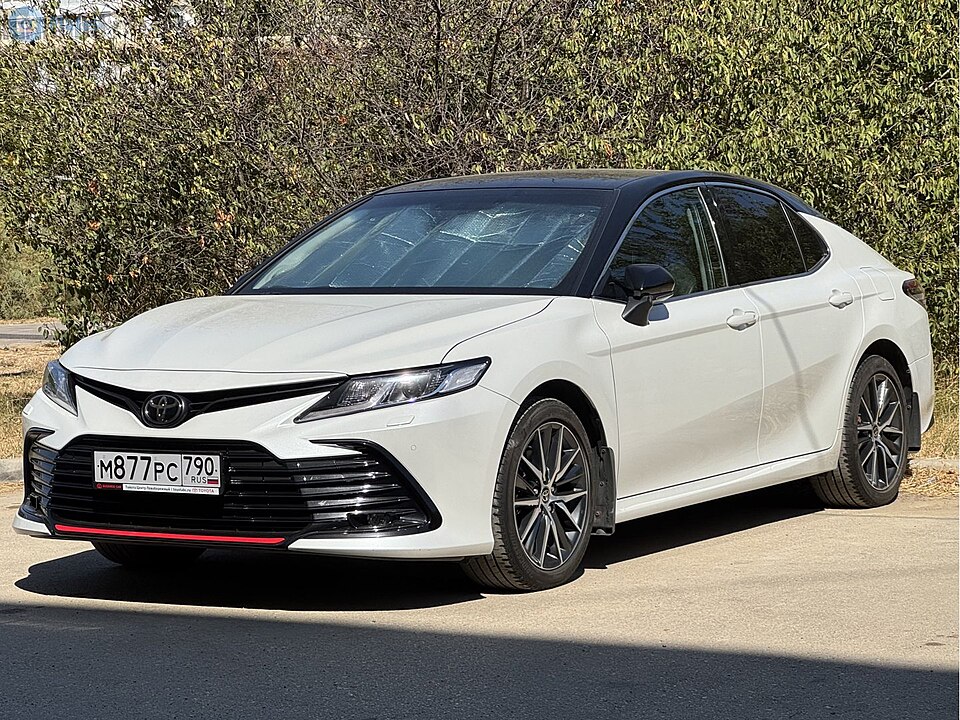
2018 Toyota Camry

Complaints by component
A complaint can name multiple components.
Complaints by vehicle age
Years between the model year and the reported incident.
View as table
| 0 | 155 |
| 1 | 85 |
| 2 | 95 |
| 3 | 102 |
| 4 | 54 |
| 5 | 54 |
| 6 | 62 |
| 7 | 80 |
| 8 | 48 |
Complaints by odometer reading
Mileage at failure, where the complainant reported it. When this curve rises early, problems show up while the vehicle is still young.
View as table
| 0k | 131 |
| 10k | 44 |
| 20k | 26 |
| 30k | 23 |
| 40k | 25 |
| 50k | 13 |
| 60k | 12 |
| 70k | 5 |
| 80k | 8 |
| 90k | 7 |
| 100k | 6 |
| 110k | 4 |
| 120k | 6 |
| 130k | 6 |
| 140k | 3 |
| 150k+ | 11 |
Recalls (8)
fuel system, gasoline · 2025-01-22 · 25V028000
Toyota Motor Engineering & Manufacturing (Toyota) is recalling certain 2018 Camry, 2019 Lexus NX300, and 2019 RX350L vehicles. The low-pressure fuel pump inside the fuel tank may fail.
Risk: Fuel pump failure can cause an engine stall, increasing the risk of a crash.
Remedy: Dealers will replace the fuel pump assembly, free of charge. Owner notification letters were mailed March 12, 2025. Owners may contact Toyota's customer service at 1-800-331-4331. Toyota's numbers for this recall are 25TA01 and 25LA01.
service brakes, hydraulic · 2021-11-17 · 21V890000
Toyota Motor Engineering & Manufacturing (Toyota) is recalling certain 2018-2019 Camry vehicles. The vane cap inside the vacuum pump may break, causing the pump to fail, which could result in a sudden loss of braking assist.
Risk: A sudden loss of braking assist can increase the risk of a crash.
Remedy: Dealers will repair or replace the vacuum pump, as necessary, free of charge. Owner notification letters were mailed May 16, 2022. Owners may contact Toyota customer service at 1-800-331-4331.
fuel system, gasoline · 2020-04-11 · 20V682000
Toyota Motor Engineering & Manufacturing (Toyota) is recalling certain 2018-2019 4Runner, 2019-2020 Avalon, 2019 Corolla Hatchback, 2017-2019 Highlander, 2018-2020 Camry, 2020 Corolla, 2018-2019 Land Cruiser, 2017-2020 Tacoma, 2019-2020 RAV4, 2019-2020 Sequoia, 2017-2020 Sienna, 2019-2020 Tundra, 2018-2020 Lexus ES350, 2017 Lexus GS200t, 2017-2019 Lexus GS350, 2019 Lexus GS300, 2018-2020 Lexus LC500h, 2019-2020 Lexus LS500, 2018-2019 Lexus GX460, 2017 Lexus IS200t, 2019 Lexus IS300, 2019 Lexus IS350, 2018-2020 Lexus LC500, 2018 Lexus LS500, 2019 Lexus LS500h, 2018-2019 Lexus LX570, 2017 Lexus RC200t, 2019 Lexus RC300, RC350, 2017 and 2019-2020 Lexus RX350, 2018-2020 RX350L, 2019 Lexus UX200, 2018-2019 Lexus NX300 vehicles. The low-pressure fuel pump inside the fuel tank may fail.
Risk: If the fuel pump fails, the engine can stall while driving, increasing the risk of a crash.
Remedy: Toyota will notify owners, and dealers will replace the fuel pump assembly with an improved one, free of charge. Owners of specific models were notified that remedy parts were available starting January 21, 2021. Owners of other models will be notified as remedy parts become available. Remedy parts should be available for all affected vehicles by late March 2021. Owners may contact Toyota customer service at 1-888-270-9371 or Lexus customer service at 1-800-255-3987. Note: This recall is an expansion of recall 20V-012. Toyota's number for this recall is 20TA02. Lexus' number for this recall is 20LA01.
fuel system, gasoline · 2020-01-13 · 20V012000
Toyota Motor Engineering & Manufacturing (Toyota) recalled certain 2018-2019 4Runner, Highlander, Camry, Land Cruiser, Sequoia, Sienna, Tacoma and Tundra, and Lexus RC 300, RC 350, GS 350, GX 460, IS 300, LC 500, LS 500, LX 570, RX 350L, and 2019 Toyota Avalon and Corolla, and certain Lexus NX 300, and ES 350 vehicles on January 13, 2020. On March 4, 2020, Toyota expanded the recall to include certain 2014-2015 Toyota 4Runner and Land Cruiser, 2018 Avalon, Corolla, 2014 FJ Cruiser, 2017 Sienna and Lexus 2018 ES 350, 2018-2019 GS 300, 2013-2014 GS350, 2014-2015 GX 460, IS 350 and LX 570, 2014 IS F, 2018-2019 IS 350, LC 500H and LS 500H, 2013-2015 LS 460, 2015 NX 200T and RC350, 2017 RC 200T and RX 350. Toyota also removed the 2018-2019 Toyota 4Runner and Land Cruiser and 2018-2019 Lexus GX 460 and LX 570 and 2019 NX300 from inclusion in this recall. On March 19, 2020, Toyota expanded the recall to include 2015 Lexus GS350 vehicles. The low-pressure fuel pump inside the fuel tank may fail.
Risk: If the fuel pump fails, the engine can stall while driving, increasing the risk of a crash.
Remedy: Toyota will notify owners, and dealers will replace the fuel pump, free of charge. The recall began May 4, 2020. Owners may contact Toyota customer service at 1-888-270-9371 or Lexus customer service at 1-800-255-3987. Toyota's numbers for this recall are 20TB02 and 20TA02 for Toyota vehicles and 20LB01 and 20LA01 for Lexus vehicles.
equipment · 2019-06-28 · 19V503000
Southeast Toyota Distributors, LLC (SET) is recalling certain 2017-2019 Toyota Camry, Corolla, Rav4, Sienna, and Yaris iA vehicles equipped with factory-installed floor mats. The load carrying capacity modification label may be incorrect. As such, these vehicles fail to comply with the requirements of Federal Motor Vehicle Safety Standard (FMVSS) number 110, "Tire Selection and Rims."
Risk: An incorrect label may lead to unintentionally overloading the vehicle, increasing the risk of a crash.
Remedy: SET will notify owners and provide a corrected label for placement over the inaccurate label, free of charge. The recall began August 23, 2019. Owners may contact Toyota customer service at 1-888-270-9371. SET's number for this recall is SET19A.
engine and engine cooling · 2018-03-28 · 18V200000
Toyota Motor Engineering & Manufacturing (Toyota) is recalling certain 2018 Toyota Camry vehicles equipped with a 2.5L, four-cylinder engine. The pistons on these vehicles may be larger than specified, possibly causing the engine to stall.
Risk: An engine stall can increase the risk of a crash.
Remedy: Toyota will notify owners, and dealers will inspect the production date codes of the pistons and, if an engine contains a piston from the affected production period, the engine assembly will be replaced, free of charge. The recall is expected to begin May 25, 2018. Owners may contact Toyota customer service at 1-888-270-9371. Toyota's number for this recall is J1M/J0M.
service brakes, hydraulic · 2018-03-04 · 18V211000
Toyota Motor Engineering & Manufacturing (Toyota) is recalling certain 2018 Toyota Camry and Highlander vehicles, 2017 Toyota Sienna and Tacoma vehicles and 2017 Lexus RX350 vehicles. During the manufacturing process, the oil galley in the rotor for the brake booster vacuum pump assembly may have been improperly machined possibly resulting in a sudden loss of brake assist.
Risk: A sudden loss of braking assist can increase the risk of a crash.
Remedy: Toyota will notify owners, and dealers will replace the brake booster vacuum pump, free of charge. The recall began on May 9, 2018. Owners may contact Toyota customer service at 1-888-270-9371, or Lexus customer service at 1-800-255-3987. Toyota's numbers for this recall are J0K/JLD.
fuel system, gasoline · 2018-02-14 · 18V108000
Toyota Motor Engineering & Manufacturing (Toyota) is recalling certain 2018 Toyota Camry vehicles equipped with V6 engines. These vehicles have fuel delivery pipes that may not be properly connected to the fuel hoses in the engine compartment.
Risk: The improperly connected hoses may leak fuel, which, in the presence of an ignition source, can increase the risk of a fire.
Remedy: Toyota will notify owners, and dealers will inspect the fuel pipes for the correct installation, correcting them as necessary, free of charge. The recall is expected to begin March 30, 2018. Owners may contact Toyota customer service at 1-888-270-9371. Toyota's number for this recall is J0G.
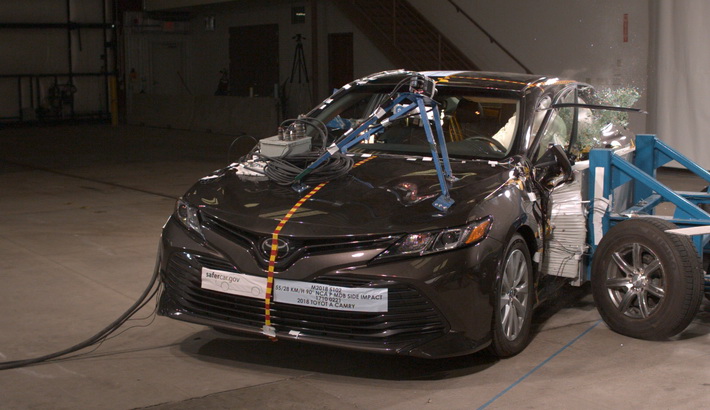
Crash-test ratings (NHTSA NCAP)

Recent complaints
I own a 2018 Toyota Camry SE with approximately 120,000 miles. The vehicle is equipped with the 2.5L engine and 8-speed automatic transmission. I have recently developed a noticeable whining noise from the vehicle's drivetrain during acceleration. The noise is most noticeable at lower speeds, approximately 10–60 mph, particularly when accelerating from a stop or at lower speeds. The noise becomes less noticeable or disappears when cruising at higher speeds. The noise is load-dependent. When I release the accelerator while traveling at approximately 30–40 mph and allow the vehicle to coast, the whining noise stops immediately. The noise does not occur when the vehicle is stationary and the engine is revved. I am concerned that this may indicate premature wear or a developing problem with the transmission or related drivetrain components. I am particularly concerned about the potential for progressive transmission failure while driving, which could result in loss of motive power and create a safety hazard. At this time, the vehicle remains drivable, but the noise appears to be abnormal and has raised concerns about the reliability and safety of the drivetrain. I am requesting that NHTSA document this complaint and investigate whether similar complaints involving 2017–2024 Toyota Camry vehicles with 8-speed automatic transmissions indicate a broader safety-related defect. I have not yet had the transmission replaced. I can provide additional information, service records, diagnostic results, photographs, or recordings of the noise if requested.
Reduce power and break power malfunction
The transmission has begun failing, with less than 60,000 miles and a perfect maintenance record. While driving I noticed a "whine" while accelerating and it would go away when not pressing the accelerator. It also did not make the noise when in neutral. This is a known issue with the 2018 Toyota Camry and the manufacturer did not send out a notice, any type of additional support or maintenance recommendations to make customers aware.
Hazard lights turn on by there self once turned off they will turn back on. When I try to use a turn signal the hazard lights will turn on instead of my turn signal
The contact owns a 2018 Toyota Camry. The contact stated that while operating the vehicle, the message "SRS Airbag System Malfunction - Visit Your Dealer" was displayed on the instrument panel. Additionally, the passenger’s seat belt sensor light remained illuminated while the seat was unoccupied. The vehicle was not diagnosed or repaired. A dealer was contacted and provided an estimate for a diagnostic test. The manufacturer was not notified of the failure. The failure mileage was 128,000.