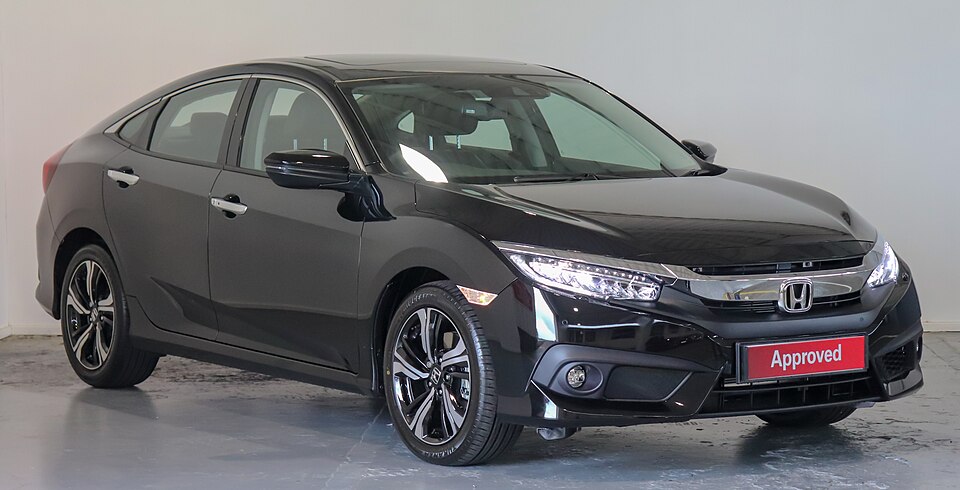
2017 Honda Civic

Complaints by component
A complaint can name multiple components.
Complaints by vehicle age
Years between the model year and the reported incident.
View as table
| 0 | 48 |
| 1 | 64 |
| 2 | 41 |
| 3 | 70 |
| 4 | 47 |
| 5 | 61 |
| 6 | 77 |
| 7 | 88 |
| 8 | 50 |
| 9 | 54 |
Complaints by odometer reading
Mileage at failure, where the complainant reported it. When this curve rises early, problems show up while the vehicle is still young.
View as table
| 0k | 61 |
| 10k | 38 |
| 20k | 25 |
| 30k | 21 |
| 40k | 23 |
| 50k | 8 |
| 60k | 13 |
| 70k | 5 |
| 80k | 4 |
| 90k | 5 |
| 100k | 4 |
| 110k | 1 |
| 120k | 0 |
| 130k | 0 |
| 140k | 4 |
| 150k+ | 3 |
Recalls (6)
air bags · 2026-05-21 · 26V332000
Honda (American Honda Motor Co.) is recalling certain 2018-2021, 2023 Acura TLX, 2019-2024 RDX, 2017-2020, 2022-2026 MDX, 2017-2021, 2023, 2025 Honda Ridgeline, 2017-2022 Pilot, 2019-2021 Passport, 2018-2026 Odyssey, 2019-2022 Insight, 2019-2021 HR-V, 2018-2020 Fit, 2020-2022 CR-V Hybrid, 2017-2022 CR-V, 2017-2018, 2021 Civic Type R, 2017-2021 Civic hatchback, 2016-2020 Civic coupe, 2016-2022 Civic, 2017-2022 Accord Hybrid, and 2016-2022 Accord vehicles. The front passenger seat weight sensor may crack and short circuit, which can cause the air bags to deploy unintentionally during a crash.
Risk: Air bags that deploy unintentionally during a crash increase the risk of injury.
Remedy: Dealers will replace the seat weight sensors, free of charge. Owner notification letters were mailed July 7, 2026. Owners may contact Honda's customer service at 1-888-234-2138. Honda's numbers for this recall are BOL, WO9, OOA, WOM, XOH, NOC, POD, BOE, UOF, POB, EOG, AOI, QO8, TOJ, DO7, and SOK. This recall expands previous NHTSA recall number 24V064. Vehicle Identification Numbers (VINs) involved in this recall will be searchable on NHTSA.gov beginning May 29, 2026.
fuel system, gasoline · 2023-12-18 · 23V858000
Honda (American Honda Motor Co.) is recalling certain 2013-2023 Honda Accord, Civic Coupe, Civic Sedan, Civic Hatchback, Civic Type R, CR-V, HR-V, Ridgeline, Odyssey, Acura ILX, MDX, MDX Hybrid, RDX, RLX, TLX, 2019-2022 Honda Insight, Passport, 2020 Honda CR-V Hybrid, 2018-2019 Honda Clarity PHEV, Fit, and 2015-2020 Honda Accord Hybrid, Pilot, Acura NSX vehicles. The fuel pump inside the fuel tank may fail.
Risk: Fuel pump failure can cause an engine stall while driving, increasing the risk of a crash.
Remedy: Dealers will replace the fuel pump module, free of charge. Owner letters were mailed September 6, 2024. Owners may contact Honda customer service at 1-888-234-2138. Honda's numbers for this recall are KGC and KGD. This recall is an expansion of NHTSA recall numbers 21V-215 and 20V-314.
equipment · 2018-11-16 · 18V817000
Honda (American Honda Motor Co.) is recalling certain 2017-2018 Honda Civic Hatchback and Civic Type R vehicles. The owners guide in these vehicles may not have been included or if included, the owner's guide may not have been properly provided required information. As such, these vehicles fail to comply with the requirements of Federal Motor Vehicle Safety Standard (FMVSS) number 225, "Child Restraint Anchorage Systems."
Risk: If the information is missing or improper, it can increase the risk of injury or a crash.
Remedy: Honda will notify owners, and dealers will replace the owners information kit, free of charge. The recall began January 9, 2019. Owners may contact Honda customer service at 1-888-234-2138. Honda's number for this recall is O3A.
steering · 2018-09-27 · 18V663000
Honda (American Honda Motor Co.) is recalling certain 2017-2018 Honda Civic and CR-V vehicles. The magnet that controls the torque sensor output signal for the electronic power steering system may not be properly secured, allowing the magnet to become dislodged. During a full lock turn, the dislodged magnet may cause steering assist to be applied in the opposite direction.
Risk: The unintended steering input reduces vehicle maneuverability and increases the risk of a crash.
Remedy: Honda will notify owners, and dealers will replace the steering gearbox assembly, free of charge. The recall began November 9, 2018. Owners may contact Honda customer service at 1-888-234-2138. Honda's numbers for this recall are C2N, P2O.
air bags · 2018-04-26 · 18V266000
Honda (American Honda Motor Co.) is recalling certain 2017 Honda Civic Hatchback and Civic Type R vehicles. Driver and front passenger seatback pads sold as replacement service parts were made without slit openings for the seat-mounted side air bags. In the event of a crash necessitating air bag deployment, the seatback pad would interfere and adversely affect air bag performance. As such, these vehicles fail to comply with the requirements of Federal Motor Vehicle Safety Standard (FMVSS) number 214, "Side Impact Protection."
Risk: If the seat-mounted air bags cannot not deploy correctly in the event of a crash, there would be an increased risk of injury.
Remedy: Honda will notify owners, and dealers will replace the front seatback pads, free of charge. The recall began June 15, 2018. Owners may contact Honda customer service at 1-888-234-2138. Honda's number for this recall is E1D, U1B, and X1C.
power train · 2017-09-11 · 17V706000
Honda (American Honda Motor Co.) is recalling certain 2017 Honda Civic Sedan and Coupe vehicles. The right halfshaft may have been improperly heat treated, reducing its strength.
Risk: The improper heat treatment can result in the halfshaft breaking, preventing the engine from moving the vehicle, and can allow a possible roll away situation if the parking brake is not engaged. This can increase the risk of a crash.
Remedy: Honda will notify owners, and dealers will inspect the halfshaft's serial number, replacing it as necessary and aligning the front wheels, free of charge. The recall began December 8, 2017. Owners may contact Honda customer service at 1-888-234-2138. Honda's number for this recall is K0E.
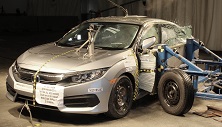
Crash-test ratings (NHTSA NCAP)
Recent complaints
After driving for 20 minutes or more and especially on hotter days my steering sticks. It is very noticeable when going in a straight line. It feels as if it gets stuck in a notch and I have to give it extra pressure to move the car which results in overcorrecting.
Sticking steering wheel
I am filing this complaint regarding repeated problems with my Honda’s A/C system. The repair history includes a leaking evaporator, which I paid for out of pocket; a failed A/C compressor, replaced under warranty; an A/C compressor shaft seal, also replaced under warranty; another compressor issue; and now an expansion valve that I am being told I must pay to replace. My concern is that the vehicle has been inspected and repaired multiple times for the same A/C system. If the expansion valve is now causing or contributing to the problem, why was it not identified during the previous repairs? I have already paid for the evaporator repair and repeatedly returned the vehicle because the A/C continues to fail. I do not believe it is reasonable to continue charging me for one component after another when the underlying problem has not been properly resolved. I am requesting that Honda and/or the dealership cover the expansion valve repair, including parts and labor, and fully inspect the A/C system to ensure the root cause is corrected. I also request an explanation as to why the expansion valve was missed during the previous repairs and why I should now be financially responsible for another related A/C repair after multiple prior attempts to fix the system.
Sticky steering. More effort required to move steering wheel. Ongoing.
I was sitting in my car with it turned off. About 1.5 minutes after it being off the electric parking brake engaged, which is not normal and I wasn’t parked on a hill. I turned on my car after hearing the E-brake engage. The dash board showed “Electric Parking Brake Problem” & the E-Brake dashboard display was flashing as well(I have a video but video is not an option for uploading). The alert magically disappeared as well.