2019 Toyota Corolla
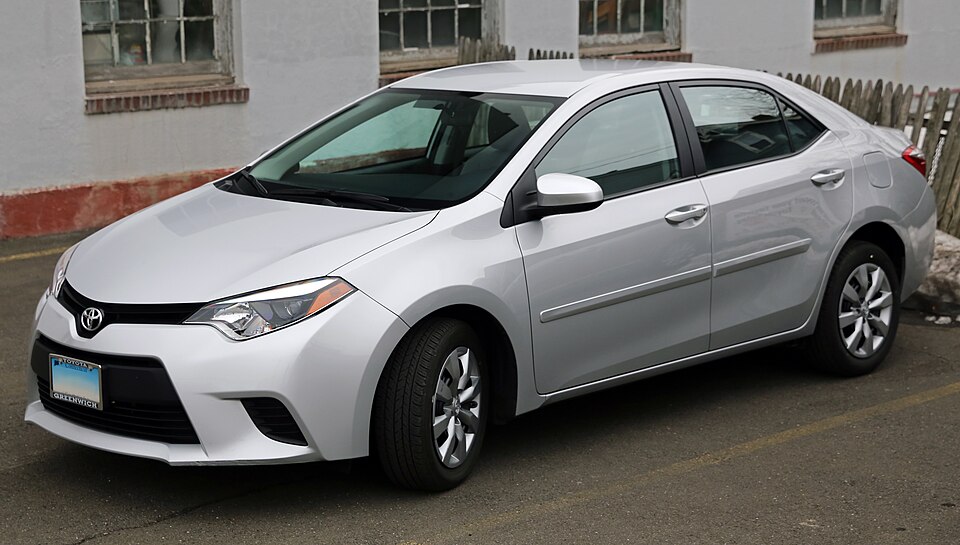
,_front_left.jpg)
Complaints by component
A complaint can name multiple components.
Complaints by vehicle age
Years between the model year and the reported incident.
View as table
| 0 | 34 |
| 1 | 39 |
| 2 | 12 |
| 3 | 24 |
| 4 | 19 |
| 5 | 37 |
| 6 | 28 |
| 7 | 8 |
Complaints by odometer reading
Mileage at failure, where the complainant reported it. When this curve rises early, problems show up while the vehicle is still young.
View as table
| 0k | 24 |
| 10k | 14 |
| 20k | 4 |
| 30k | 5 |
| 40k | 2 |
| 50k | 1 |
| 60k | 1 |
| 70k | 1 |
| 80k | 1 |
| 90k | 0 |
| 100k | 0 |
| 110k | 0 |
| 120k | 1 |
Recalls (5)
air bags · 2020-01-17 · 20V024000
Toyota Motor Engineering & Manufacturing (Toyota) is recalling certain 2011-2019 Corolla, 2011-2013 Matrix, 2012-2018 Avalon, and 2013-2018 Avalon Hybrid vehicles. During certain crashes, the air bag electronic control unit (ECU) may malfunction, possibly disabling the deployment of the air bags and/or seat belt pretensioners.
Risk: In the event of a crash, air bags and/or seat belt pretensioners that do not deploy as intended may increase the risk of injury.
Remedy: Toyota will notify owners, and dealers will inspect the ECU and install a noise filter between the air bag control module and its wire harness, as necessary, free of charge. Owners were notified of the safety risk beginning March 2, 2020. A second letter notifying owners of the remedy repair will be mailed between March 16, 2020 and June 27, 2020. Owners may contact Toyota customer service at 1-888-270-9371. Toyota's numbers for this recall are 20TB03, 20TA03 and 20TA05.
fuel system, gasoline · 2020-01-13 · 20V012000
Toyota Motor Engineering & Manufacturing (Toyota) recalled certain 2018-2019 4Runner, Highlander, Camry, Land Cruiser, Sequoia, Sienna, Tacoma and Tundra, and Lexus RC 300, RC 350, GS 350, GX 460, IS 300, LC 500, LS 500, LX 570, RX 350L, and 2019 Toyota Avalon and Corolla, and certain Lexus NX 300, and ES 350 vehicles on January 13, 2020. On March 4, 2020, Toyota expanded the recall to include certain 2014-2015 Toyota 4Runner and Land Cruiser, 2018 Avalon, Corolla, 2014 FJ Cruiser, 2017 Sienna and Lexus 2018 ES 350, 2018-2019 GS 300, 2013-2014 GS350, 2014-2015 GX 460, IS 350 and LX 570, 2014 IS F, 2018-2019 IS 350, LC 500H and LS 500H, 2013-2015 LS 460, 2015 NX 200T and RC350, 2017 RC 200T and RX 350. Toyota also removed the 2018-2019 Toyota 4Runner and Land Cruiser and 2018-2019 Lexus GX 460 and LX 570 and 2019 NX300 from inclusion in this recall. On March 19, 2020, Toyota expanded the recall to include 2015 Lexus GS350 vehicles. The low-pressure fuel pump inside the fuel tank may fail.
Risk: If the fuel pump fails, the engine can stall while driving, increasing the risk of a crash.
Remedy: Toyota will notify owners, and dealers will replace the fuel pump, free of charge. The recall began May 4, 2020. Owners may contact Toyota customer service at 1-888-270-9371 or Lexus customer service at 1-800-255-3987. Toyota's numbers for this recall are 20TB02 and 20TA02 for Toyota vehicles and 20LB01 and 20LA01 for Lexus vehicles.
equipment · 2019-06-28 · 19V503000
Southeast Toyota Distributors, LLC (SET) is recalling certain 2017-2019 Toyota Camry, Corolla, Rav4, Sienna, and Yaris iA vehicles equipped with factory-installed floor mats. The load carrying capacity modification label may be incorrect. As such, these vehicles fail to comply with the requirements of Federal Motor Vehicle Safety Standard (FMVSS) number 110, "Tire Selection and Rims."
Risk: An incorrect label may lead to unintentionally overloading the vehicle, increasing the risk of a crash.
Remedy: SET will notify owners and provide a corrected label for placement over the inaccurate label, free of charge. The recall began August 23, 2019. Owners may contact Toyota customer service at 1-888-270-9371. SET's number for this recall is SET19A.
equipment · 2019-03-27 · 19V244000
Gulf States Toyota (GST) is recalling certain 2019 C-HR, 4Runner, Avalon, Avalon Hybrid, Camry, Camry Hybrid, Highlander, Land Cruiser, Prius, RAV4, Sequoia, Tacoma, Sienna, Tundra and Yaris vehicles. The text on the load capacity label may become illegible. As such, these vehicles fail to comply with the requirements of Federal Motor Vehicle Safety Standard (FMVSS) number 110, "Tire Selection and Rims."
Risk: If the driver cannot read the label, they may unknowingly overload the vehicle, increasing the risk of a crash.
Remedy: GST will notify owners, and dealers will provide corrected load carrying capacity modification labels, free of charge. The recall began May 24, 2019. Owners may contact GST customer service at 1-800-444-1074. GST's number for this recall is 19R1.
power train · 2018-12-19 · 18V901000
Toyota Motor Engineering & Manufacturing (Toyota) is recalling certain 2019 Toyota Corolla hatchback vehicles equipped with Continuously Variable Transmissions (CVT). The pump impeller blades within the torque converter may detach, especially when driven under high load, potentially causing a vehicle stall.
Risk: A vehicle stall, especially when driving a high rate of speed, can increase the risk of a crash.
Remedy: Toyota has notified owners, and dealers will replace the CVT and torque converter, free of charge. The recall began April 22, 2019. Owners may contact Toyota customer service at 1-888-270-9371. Toyota's number for this recall is J17/J07.
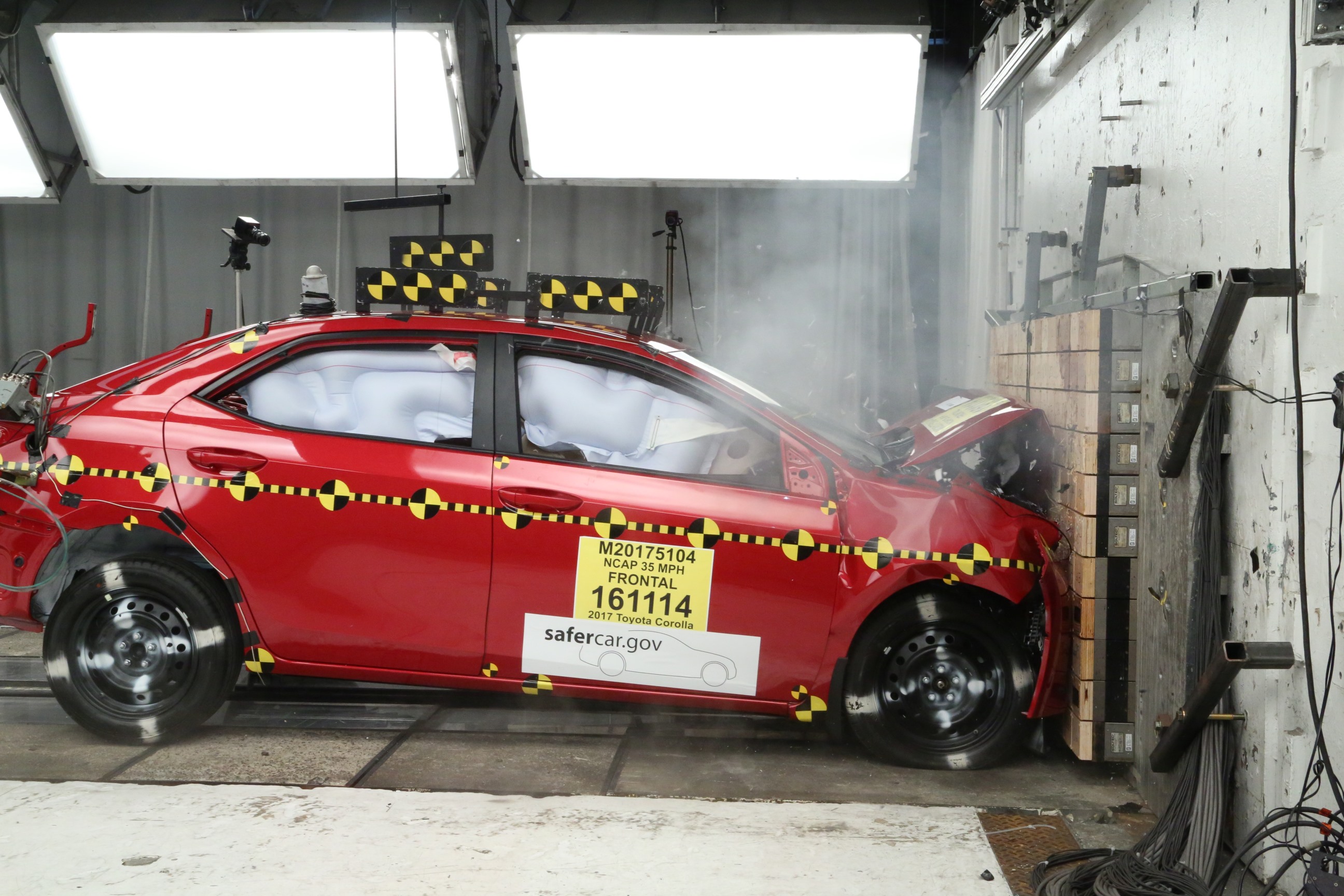
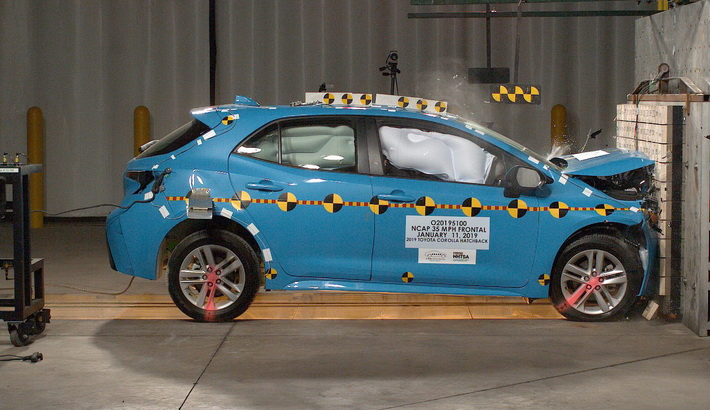
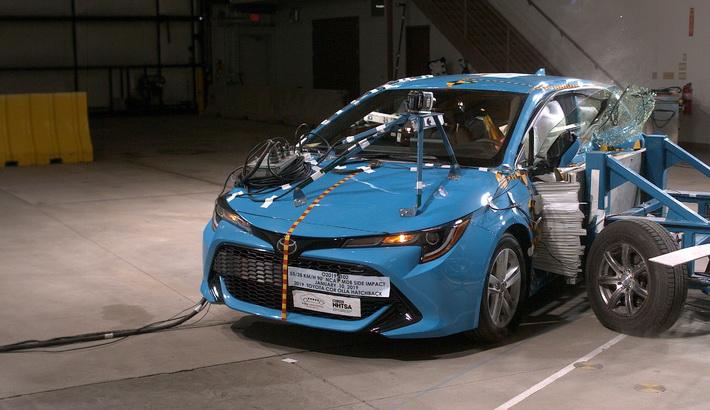
Crash-test ratings (NHTSA NCAP)
Recent complaints
Odometer Fraud. The contact purchased a 2019 Toyota Corolla. The contact stated that while attempting to register the vehicle, it was discovered that there was a mileage discrepancy. The vehicle was a dealer sale. At the time of purchase, the vehicle mileage was 45,709, and at the time of registration, it was discovered that the mileage listed on the title was 46,091. Additionally, the contact later became aware that the vehicle was a salvaged vehicle. The seller was contacted several times but blocked all communications.
The contact owns a 2019 Toyota Corolla. The contact stated that while driving at an undisclosed speed, the low tire pressure warning light illuminated, with several other unknown warning lights illuminated. The vehicle was taken to an independent mechanic to be diagnosed. However, the independent mechanic stated that the tire pressures were not low, and that the cause of the failure was not determined. The vehicle was not repaired. The manufacturer was not notified of the failure. The failure mileage was approximately 75,000.
I was driving on a two lane state road. Two vehicles we traveling in front of me in the left lane. The further vehicle in left decide to make a sudden stop at a traffic light. The silver sedan behind that vehicle was traveling too close to react appropriately. The sedan avoid the vehicle in front of it and impeded into my lane and collide with my vehicle. My airbags in my 2019 Corolla failed to deploy.
Premature slave cylinder failure at ~70k miles. Suddenly started leaking brake fluid profusely. Inspected and confirmed by Toyota dealership. No symptoms prior to failure. Clutch stopped functioning, unable to shift while driving. Pulled over to inspect and all of the brake fluid had leaked out. Refilled brake fluid and bled system, reservoir leaked to minimum fill line within 24 hours.
DESCRIPTION OF SAFETY ISSUE: The Concentric Slave Cylinder (CSC) on my 2019 Toyota Corolla Hatchback 6-speed manual failed during normal driving at around 60mph, creating an immediate and uncontrolled safety hazard. The clutch pedal depressed fully to the floor while I was shifting from 5th gear to 6th gear and the vehicle became unable to be shifted out of gear, leaving me unable to properly control vehicle speed or movement. The only way to release the transmission was to physically reach down and lift the clutch pedal up with my foot while attempting to drive. CRITICAL SAFETY CONCERN - SHARED BRAKE AND CLUTCH FLUID RESERVOIR: On this vehicle, the brake fluid reservoir and clutch hydraulic system share a single reservoir. When the CSC fails and leaks fluid, brake fluid is consumed directly from the same reservoir that supplies the braking system. A CSC failure does not only result in loss of clutch function — it results in loss of brake fluid, and with sufficient fluid loss, partial or complete brake failure. This is not a theoretical risk. This vehicle can fail in a way that simultaneously removes the driver's ability to control vehicle speed via the transmission AND reduces or eliminates braking capability — both at the same time, without warning I am requesting that NHTSA investigate this as a safety defect and consider whether a recall or service campaign is warranted given the risk of simultaneous clutch and brake failure on these vehicles.