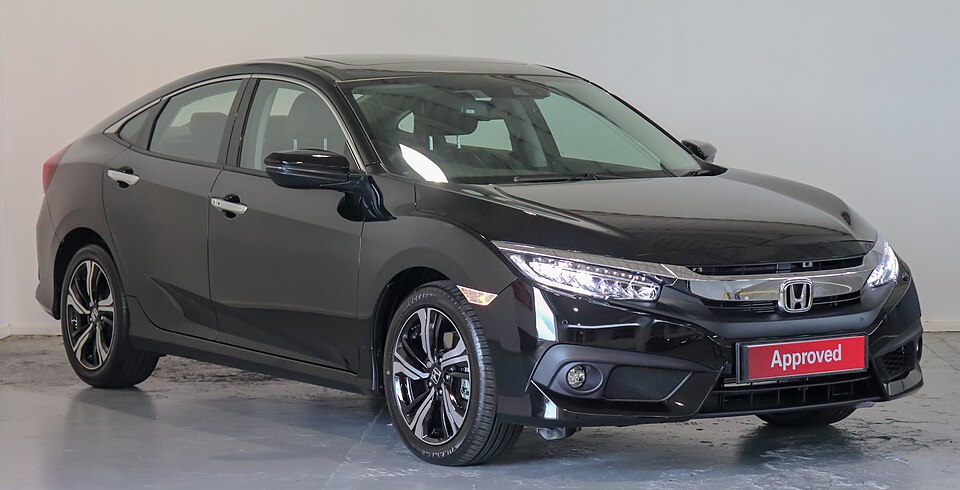
2020 Honda Civic

Complaints by component
A complaint can name multiple components.
Complaints by vehicle age
Years between the model year and the reported incident.
View as table
| 0 | 23 |
| 1 | 32 |
| 2 | 26 |
| 3 | 32 |
| 4 | 52 |
| 5 | 42 |
| 6 | 22 |
Complaints by odometer reading
Mileage at failure, where the complainant reported it. When this curve rises early, problems show up while the vehicle is still young.
View as table
| 0k | 22 |
| 10k | 8 |
| 20k | 6 |
| 30k | 0 |
| 40k | 5 |
| 50k | 3 |
| 60k | 3 |
| 70k | 1 |
| 80k | 0 |
| 90k | 0 |
| 100k | 0 |
| 110k | 1 |
Recalls (5)
air bags · 2026-05-21 · 26V332000
Honda (American Honda Motor Co.) is recalling certain 2018-2021, 2023 Acura TLX, 2019-2024 RDX, 2017-2020, 2022-2026 MDX, 2017-2021, 2023, 2025 Honda Ridgeline, 2017-2022 Pilot, 2019-2021 Passport, 2018-2026 Odyssey, 2019-2022 Insight, 2019-2021 HR-V, 2018-2020 Fit, 2020-2022 CR-V Hybrid, 2017-2022 CR-V, 2017-2018, 2021 Civic Type R, 2017-2021 Civic hatchback, 2016-2020 Civic coupe, 2016-2022 Civic, 2017-2022 Accord Hybrid, and 2016-2022 Accord vehicles. The front passenger seat weight sensor may crack and short circuit, which can cause the air bags to deploy unintentionally during a crash.
Risk: Air bags that deploy unintentionally during a crash increase the risk of injury.
Remedy: Dealers will replace the seat weight sensors, free of charge. Owner notification letters were mailed July 7, 2026. Owners may contact Honda's customer service at 1-888-234-2138. Honda's numbers for this recall are BOL, WO9, OOA, WOM, XOH, NOC, POD, BOE, UOF, POB, EOG, AOI, QO8, TOJ, DO7, and SOK. This recall expands previous NHTSA recall number 24V064. Vehicle Identification Numbers (VINs) involved in this recall will be searchable on NHTSA.gov beginning May 29, 2026.
air bags · 2024-01-02 · 24V064000
Honda (American Honda Motor Co.) is recalling certain 2020-2022 Pilot, Accord, Civic sedan, HR-V, Odyssey, 2020 Civic coupe, Fit, 2021-2022 Civic hatchback, 2021 Civic Type R, Insight, 2020-2021 CR-V, CR-V Hybrid, Passport, Ridgeline, Accord Hybrid, 2020 Acura MDX, 2022 Acura MDX, 2020-2022 Acura RDX, and 2020-2021 Acura TLX vehicles. The front passenger seat weight sensor may crack and short circuit, failing to suppress the air bag as intended.
Risk: An air bag that deploys unintentionally during a crash can increase the risk of injury.
Remedy: Dealers will replace the seat weight sensors, free of charge. Owner notification letters were mailed March 28, 2024. This is a phased recall. Owners may contact Honda customer service at 1-888-234-2138. Honda's numbers for these recalls are XHP and VHQ.
fuel system, gasoline · 2023-12-18 · 23V858000
Honda (American Honda Motor Co.) is recalling certain 2013-2023 Honda Accord, Civic Coupe, Civic Sedan, Civic Hatchback, Civic Type R, CR-V, HR-V, Ridgeline, Odyssey, Acura ILX, MDX, MDX Hybrid, RDX, RLX, TLX, 2019-2022 Honda Insight, Passport, 2020 Honda CR-V Hybrid, 2018-2019 Honda Clarity PHEV, Fit, and 2015-2020 Honda Accord Hybrid, Pilot, Acura NSX vehicles. The fuel pump inside the fuel tank may fail.
Risk: Fuel pump failure can cause an engine stall while driving, increasing the risk of a crash.
Remedy: Dealers will replace the fuel pump module, free of charge. Owner letters were mailed September 6, 2024. Owners may contact Honda customer service at 1-888-234-2138. Honda's numbers for this recall are KGC and KGD. This recall is an expansion of NHTSA recall numbers 21V-215 and 20V-314.
service brakes, hydraulic · 2023-06-29 · 23V458000
Honda (American Honda Motor Co.) is recalling certain 2020-2021 Civic, 2020-2023 Ridgeline, 2021-2023 Passport, 2021-2022 Pilot, and 2020 Acura MDX vehicles. The tie rod fastener that connects the brake booster and the brake master cylinder may have been improperly assembled during manufacturing, which can cause the brake master cylinder to separate from the booster assembly.
Risk: Brake master cylinder separation can cause a loss of brake function and increase the risk of a crash.
Remedy: Dealers will inspect and repair the brake booster assembly as necessary, free of charge. Owner notification letters were mailed August 7, 2023. Owners may contact Honda customer service at 1-888-234-2138. Honda's numbers for this recall are VEU, AEV, and ZET.
fuel system, gasoline · 2021-03-25 · 21V215000
Honda (American Honda Motor Co.) is recalling certain 2019-2020 Acura MDX, MDX Sport Hybrid, RDX, TLX, Honda Accord, Civic Hatchback, Insight, 2019 Acura ILX, Honda Accord Hybrid, Civic Coupe, Civic Coupe Si, Civic Sedan, Civic Sedan Si, Civic Type R, Fit, HR-V, Odyssey, Passport, Pilot and Ridgeline, and 2018-2019 CR-V vehicles. The low-pressure fuel pump inside the fuel tank may fail.
Risk: Fuel pump failure can cause an engine stall while driving, increasing the risk of a crash.
Remedy: Honda will notify owners, and dealers will replace the fuel pump assembly, free of charge. Owner letters were mailed May 18, 2021. Owners may contact Honda customer service at 1-888-234-2138. Note: This recall is an expansion of recall 20V-314.
Crash-test ratings (NHTSA NCAP)


Recent complaints
My car 2020 honda civic has an issue with the steering wheel. I have noticed in the past 6 months that the steering wheel has become increasingly stiff and gets stuck during turns. This is a concern of mine because at times it becomes difficult to keep in traffic lanes. The car has not been inspected by anyone.
On September 27, 2026, at approximately 90,800 miles, the body control module (BCM) in my 2020 Honda Civic Hatchback failed. Symptoms included the alarm sounding on its own, warning lights illuminating on the dash, the vehicle turning its accessories on unprompted while parked (key fob was present), the battery draining, and the key fob intermittently not being recognized.
The air conditioning condenser failed prematurely due to a known manufacturing defect covered under Honda's 10-year warranty extension (TSB 19-091), but the dealership, Stokes Honda North and American Honda Motor Co.’s refused to honor the coverage. I reside in Charleston, South Carolina, where summer temperatures and humidity levels are extreme. Because of this defect, the vehicle's cabin becomes dangerously hot within minutes. I frequently transport my two young children in this vehicle, and the lack of functional climate control places them at an immediate risk for severe heat exhaustion, dehydration, and heat-related illness. Furthermore, the failure of the AC system means the vehicle can no longer properly dehumidify the cabin air. During sudden South Carolina rainstorms, the windshield and windows instantly fog over, rendering the defroster useless. This causes an immediate, severe loss of visibility while driving on high-speed roads, creating a catastrophic safety hazard for myself, my children, and other drivers.
Steering rack malfunction which is a major safety issue. It was said to be only in 2022-2025 civics but it is very clear this is happening in the 2020s as well
When driving, especially at highway speeds where only minor tracking adjustments are needed, the steering wheel can feel like it is momentarily sticking or catching. Having to exert sudden, extra physical effort to "break" the wheel free from this sticky point. This often leads to momentary overcorrection, significantly increasing the risk of a crash.