2019 Honda Accord

Complaints by component
A complaint can name multiple components.
Complaints by vehicle age
Years between the model year and the reported incident.
View as table
| 0 | 66 |
| 1 | 58 |
| 2 | 48 |
| 3 | 74 |
| 4 | 82 |
| 5 | 139 |
| 6 | 122 |
| 7 | 107 |
Complaints by odometer reading
Mileage at failure, where the complainant reported it. When this curve rises early, problems show up while the vehicle is still young.
View as table
| 0k | 75 |
| 10k | 31 |
| 20k | 17 |
| 30k | 11 |
| 40k | 5 |
| 50k | 8 |
| 60k | 9 |
| 70k | 5 |
| 80k | 6 |
| 90k | 7 |
| 100k | 4 |
| 110k | 4 |
| 120k | 6 |
| 130k | 4 |
| 140k | 2 |
| 150k+ | 5 |
Recalls (6)
air bags · 2026-05-21 · 26V332000
Honda (American Honda Motor Co.) is recalling certain 2018-2021, 2023 Acura TLX, 2019-2024 RDX, 2017-2020, 2022-2026 MDX, 2017-2021, 2023, 2025 Honda Ridgeline, 2017-2022 Pilot, 2019-2021 Passport, 2018-2026 Odyssey, 2019-2022 Insight, 2019-2021 HR-V, 2018-2020 Fit, 2020-2022 CR-V Hybrid, 2017-2022 CR-V, 2017-2018, 2021 Civic Type R, 2017-2021 Civic hatchback, 2016-2020 Civic coupe, 2016-2022 Civic, 2017-2022 Accord Hybrid, and 2016-2022 Accord vehicles. The front passenger seat weight sensor may crack and short circuit, which can cause the air bags to deploy unintentionally during a crash.
Risk: Air bags that deploy unintentionally during a crash increase the risk of injury.
Remedy: Dealers will replace the seat weight sensors, free of charge. Owner notification letters were mailed July 7, 2026. Owners may contact Honda's customer service at 1-888-234-2138. Honda's numbers for this recall are BOL, WO9, OOA, WOM, XOH, NOC, POD, BOE, UOF, POB, EOG, AOI, QO8, TOJ, DO7, and SOK. This recall expands previous NHTSA recall number 24V064. Vehicle Identification Numbers (VINs) involved in this recall will be searchable on NHTSA.gov beginning May 29, 2026.
fuel system, gasoline · 2023-12-18 · 23V858000
Honda (American Honda Motor Co.) is recalling certain 2013-2023 Honda Accord, Civic Coupe, Civic Sedan, Civic Hatchback, Civic Type R, CR-V, HR-V, Ridgeline, Odyssey, Acura ILX, MDX, MDX Hybrid, RDX, RLX, TLX, 2019-2022 Honda Insight, Passport, 2020 Honda CR-V Hybrid, 2018-2019 Honda Clarity PHEV, Fit, and 2015-2020 Honda Accord Hybrid, Pilot, Acura NSX vehicles. The fuel pump inside the fuel tank may fail.
Risk: Fuel pump failure can cause an engine stall while driving, increasing the risk of a crash.
Remedy: Dealers will replace the fuel pump module, free of charge. Owner letters were mailed September 6, 2024. Owners may contact Honda customer service at 1-888-234-2138. Honda's numbers for this recall are KGC and KGD. This recall is an expansion of NHTSA recall numbers 21V-215 and 20V-314.
seat belts · 2023-09-03 · 23V158000
Honda (American Honda Motor Co.) is recalling certain 2017-2020 CR-V, 2018-2019 Accord and Accord Hybrid, 2018-2020 Odyssey, 2019 Insight, and 2019-2020 Acura RDX vehicles. A manufacturing issue with the front seat belts may cause the seat belt buckle channel to interfere with the release button, preventing the seat belt buckle from latching.
Risk: An unlatched seat belt cannot properly restrain the seat occupant during a crash, increasing their risk of injury.
Remedy: Dealers will replace the driver and front passenger seat belt buckle release buttons or the buckle assemblies as necessary, free of charge. Owner notification letters were mailed April 18, 2023. Owners may contact Honda customer service at 1-888-234-2138. Honda's numbers for this recall are NDA, QDB, BDC, MDD, LD9. TDF, FDG, ODH, YDI, ZDE.
fuel system, gasoline · 2021-03-25 · 21V215000
Honda (American Honda Motor Co.) is recalling certain 2019-2020 Acura MDX, MDX Sport Hybrid, RDX, TLX, Honda Accord, Civic Hatchback, Insight, 2019 Acura ILX, Honda Accord Hybrid, Civic Coupe, Civic Coupe Si, Civic Sedan, Civic Sedan Si, Civic Type R, Fit, HR-V, Odyssey, Passport, Pilot and Ridgeline, and 2018-2019 CR-V vehicles. The low-pressure fuel pump inside the fuel tank may fail.
Risk: Fuel pump failure can cause an engine stall while driving, increasing the risk of a crash.
Remedy: Honda will notify owners, and dealers will replace the fuel pump assembly, free of charge. Owner letters were mailed May 18, 2021. Owners may contact Honda customer service at 1-888-234-2138. Note: This recall is an expansion of recall 20V-314.
electrical system · 2020-10-12 · 20V771000
Honda (American Honda Motor Co.) is recalling certain 2018-2020 Accord Sedan, Accord Hybrid, and 2019-2020 Insight vehicles. A software error may cause intermittent or continuous disruptions in communication between the Body Control Module (BCM) and other components. This may result in malfunctions of various systems such as the windshield wipers and defroster, rearview camera, exterior lights, audible warning of a stopped vehicle, and power window operation. As such, these vehicles fail to comply with the requirements of Federal Motor Vehicle Safety Standard (FMVSS) number 103, "Windshield Defrosting and Defogging Systems" and number 111, "Rear Visibility" as well as FMVSS numbers 104, 108, 114, 118, and 305.
Risk: Various system malfunctions such as inoperative windshield wipers, defroster, rearview camera, or exterior lighting can increase the risk of a crash.
Remedy: Honda will notify owners, and dealers will update the BCM software, free of charge. The recall is expected to begin February 22, 2021. Owners may contact Honda customer service at 1-888-234-2138. Honda's number for this recall is X95.
fuel system, gasoline · 2020-05-28 · 20V314000
Honda (American Honda Motor Co.) is recalling certain 2018-2019 Acura NSX, 2019 Acura RDX, RLX and RLX Sport Hybrid, 2018-2019 Honda Accord, Civic Hatchback, Civic Type R and HR-V, 2019-2020 Insight and 2019 Fit vehicles. The low-pressure fuel pump inside the fuel tank may fail.
Risk: If the fuel pump fails, the engine can stall while driving, increasing the risk of a crash.
Remedy: Honda will notify owners and dealers will replace the fuel pump assembly, free of charge. The recall began July 22, 2020. Owners may contact Honda customer service at 1-888-234-2138.
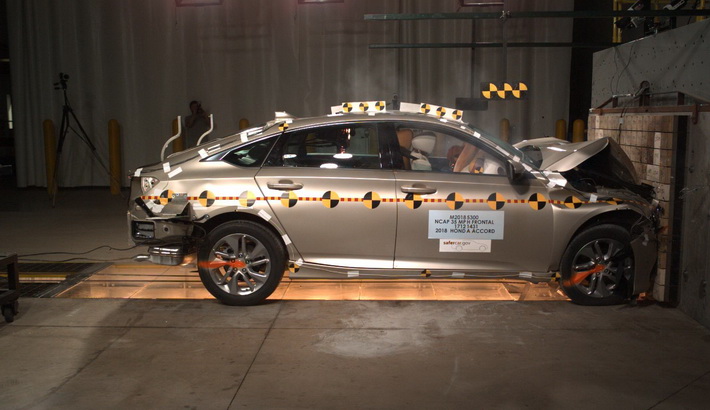
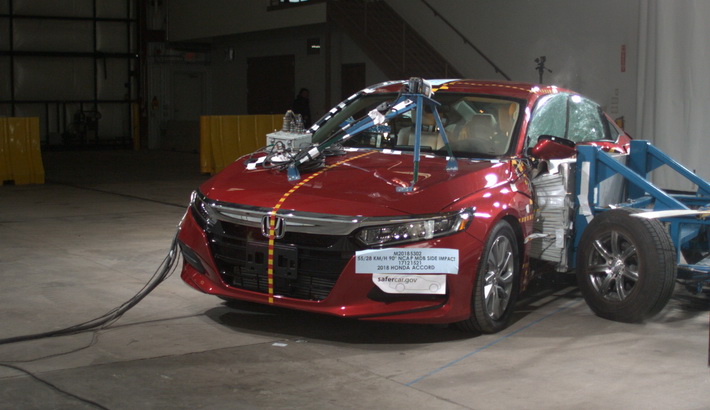
Crash-test ratings (NHTSA NCAP)
Recent complaints
Air conditioning failure: The A/C was blowing warm air on the first day of ownership. • Cooling system failure: The vehicle subsequently experienced overheating issues and left me stranded. • Coolant loss and radiator leak: All Star Honda identified a leaking radiator and found the cooling system out of coolant. • Failed thermostat: A failed thermostat was identified during the diagnostic and repair process. • Stop-leak substance found in the cooling system: Stop-leak material was observed in the cooling system. I have concerns about why it was present and not disclosed initially • Water pump and cooling-system repairs: Repairs included work on the thermostat and water pump, followed by radiator replacement and a coolant flush. • Continued overheating concerns: Despite repairs, I continued experiencing overheating alerts. • Engine performance problems: The vehicle experienced a loss of power, with a reported inability to maintain speeds above approximately 60 mph during one incident. • Check-engine warning: A prior repair-order history documented a blinking malfunction indicator light during a driving incident. • Diagnostic trouble codes: Codes P2601 and P272D were subsequently reported. • Potential head-gasket concerns: The possibility of a head-gasket problem has been raised during the ongoing dispute. Honda has referenced a multi-model cylinder-head-gasket warranty extension, but I have not received approval for coverage on my vehicle. • Warranty denial: Honda corporate has declined to approve the requested warranty coverage. Despite the repeated problems, diagnostic visits, and repair attempts, I am still dealing with the consequences of purchasing a vehicle that has not provided the reliable transportation I paid for. I have spent time and money trying to get answers, and I have been left facing the financial burden of a vehicle that I cannot confidently depend on. I am sharing this timeline because consumers deserve trans
The response to an accelerator input on this vehicle is unreasonably slow and has many times resulted in an unsafe condition. When applying a significant amount of throttle from a stop, or a slow speed, the driver expects the vehicle to respond immediately. I would like to note, that I am not referring to the vehicle's rate of acceleration. I am referring to how long it takes for the vehicle to begin accelerating. During several controlled tests, I applied significant throttle and timed the response to nearly 3s before the vehicle began to exhibit any significant acceleration. I believe this can be easily corrected as it is likely a delay built into the software.
I am reporting repeated, unpredictable loss of engine power and propulsion in my 2019 Honda Accord Touring 2.0T (approximately 146,000 miles). The exact cause remains UNKNOWN. On XXX, while driving on [XXX] near [XXX], my vehicle suddenly lost acceleration at highway speeds and eventually stalled. The vehicle repeatedly lost power, experienced crank-no-start conditions, and at one point could barely maintain 10 mph. I was stranded and had to have the vehicle transported to a Honda dealership in [XXX]. Diagnostic code P0087 (Fuel Rail/System Pressure Too Low) was recorded multiple times, including at 70–74 mph. Numerous warnings appeared, including emissions, brake system, electric power steering, stability assist, adaptive cruise control, collision mitigation, and road departure mitigation. The unpredictable loss of propulsion creates a serious collision risk, especially on highways and in traffic. The Honda dealership initially could not reproduce the failure. After replacing the spark plugs at my expense, the vehicle was returned to me. Approximately 23 miles later, the malfunction returned, and I immediately brought the vehicle back without clearing any codes. Honda subsequently diagnosed and replaced the high-pressure fuel pump at my expense, but the loss-of-power issue continued. The vehicle previously received Honda’s in-tank fuel pump safety recall repair in May 2025. Despite that recall remedy and subsequent repairs, the vehicle continues to malfunction. The exact cause remains undetermined. The vehicle has been inspected by an authorized Honda dealership. Repair records and diagnostic information are available, and the vehicle can be made available for inspection upon request. I am requesting an investigation into this recurring safety-related loss of propulsion. INFORMATION REDACTED PURSUANT TO THE FREEDOM OF INFORMATION ACT (FOIA), 5 U.S.C. 552(B)(6)
I own a 2019 Honda Accord Touring 2.0T with approximately 75,500 miles. I brought the vehicle to Ryan Honda in Monroe, Louisiana, for Honda Campaign 26-091, which involved a software update to the ACC/CMBS Honda Sensing system. Before this campaign was performed, the vehicle had no ABS, VSA, brake-system, adaptive-cruise-control, collision-mitigation, or related warning messages. Approximately six hours after the dealer completed Campaign 26-091, multiple braking, stability-control, and driver-assistance warning lights/messages appeared. I returned the vehicle to Ryan Honda. The dealership diagnosed a failed VSA modulator/control unit and initially quoted approximately $1,785 for replacement. Because the failure appeared only hours after Honda performed software work involving interconnected driver-assistance and braking systems, I questioned whether the recall procedure, programming process, electrical conditions during programming, or resulting module communication could have contributed. The matter was escalated to a Honda representative, who reportedly consulted Honda engineering. I was told Honda engineering determined that Campaign 26-091 and the VSA modulator failure were completely unrelated and that the software update could not have caused the failure. Honda subsequently offered to install a used VSA modulator, reducing my cost to approximately $650. I understand that timing alone does not prove causation. However, I believe the extremely close timing between Campaign 26-091 and the sudden appearance of multiple safety-system failures warrants investigation. I am asking NHTSA to document this incident and determine whether other Honda vehicles receiving Campaign 26-091 have experienced similar ABS, VSA, brake-system, or Honda Sensing failures shortly after the software update.
The contact owns a 2019 Honda Accord. The contact stated that while driving at highway speeds, the vehicle suddenly lost power and decelerated. The contact stated that several warning lights were illuminated and the vehicle decelerated quickly. The contact feared for her safety because of the sudden deceleration on a busy highway. The contact was able to guide the vehicle safely onto the shoulder of the road. The contact stated that prior to the failure, the vehicle had received several recall repairs including a BCM reprogramming, software updates, and fuel pump recall repair. The vehicle was towed to a local dealer and the vehicle remained pending a diagnostic test. The failure mileage was 62,590.