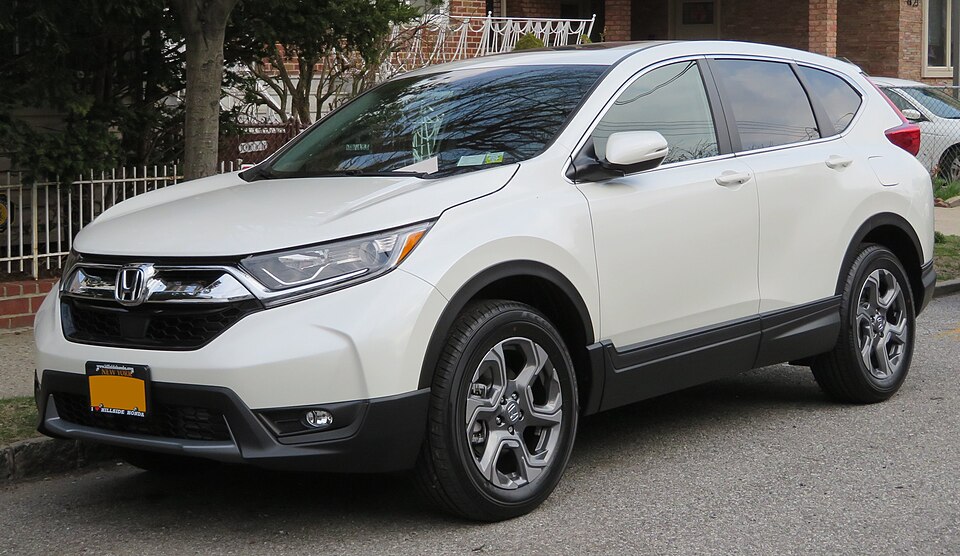
2017 Honda CR-V

Complaints by component
A complaint can name multiple components.
Complaints by vehicle age
Years between the model year and the reported incident.
View as table
| 0 | 153 |
| 1 | 435 |
| 2 | 294 |
| 3 | 124 |
| 4 | 132 |
| 5 | 162 |
| 6 | 141 |
| 7 | 117 |
| 8 | 132 |
| 9 | 85 |
Complaints by odometer reading
Mileage at failure, where the complainant reported it. When this curve rises early, problems show up while the vehicle is still young.
View as table
| 0k | 296 |
| 10k | 219 |
| 20k | 150 |
| 30k | 100 |
| 40k | 64 |
| 50k | 37 |
| 60k | 21 |
| 70k | 13 |
| 80k | 13 |
| 90k | 6 |
| 100k | 7 |
| 110k | 5 |
| 120k | 3 |
| 130k | 3 |
| 140k | 5 |
| 150k+ | 9 |
Recalls (7)
air bags · 2026-05-21 · 26V332000
Honda (American Honda Motor Co.) is recalling certain 2018-2021, 2023 Acura TLX, 2019-2024 RDX, 2017-2020, 2022-2026 MDX, 2017-2021, 2023, 2025 Honda Ridgeline, 2017-2022 Pilot, 2019-2021 Passport, 2018-2026 Odyssey, 2019-2022 Insight, 2019-2021 HR-V, 2018-2020 Fit, 2020-2022 CR-V Hybrid, 2017-2022 CR-V, 2017-2018, 2021 Civic Type R, 2017-2021 Civic hatchback, 2016-2020 Civic coupe, 2016-2022 Civic, 2017-2022 Accord Hybrid, and 2016-2022 Accord vehicles. The front passenger seat weight sensor may crack and short circuit, which can cause the air bags to deploy unintentionally during a crash.
Risk: Air bags that deploy unintentionally during a crash increase the risk of injury.
Remedy: Dealers will replace the seat weight sensors, free of charge. Owner notification letters were mailed July 7, 2026. Owners may contact Honda's customer service at 1-888-234-2138. Honda's numbers for this recall are BOL, WO9, OOA, WOM, XOH, NOC, POD, BOE, UOF, POB, EOG, AOI, QO8, TOJ, DO7, and SOK. This recall expands previous NHTSA recall number 24V064. Vehicle Identification Numbers (VINs) involved in this recall will be searchable on NHTSA.gov beginning May 29, 2026.
fuel system, gasoline · 2023-12-18 · 23V858000
Honda (American Honda Motor Co.) is recalling certain 2013-2023 Honda Accord, Civic Coupe, Civic Sedan, Civic Hatchback, Civic Type R, CR-V, HR-V, Ridgeline, Odyssey, Acura ILX, MDX, MDX Hybrid, RDX, RLX, TLX, 2019-2022 Honda Insight, Passport, 2020 Honda CR-V Hybrid, 2018-2019 Honda Clarity PHEV, Fit, and 2015-2020 Honda Accord Hybrid, Pilot, Acura NSX vehicles. The fuel pump inside the fuel tank may fail.
Risk: Fuel pump failure can cause an engine stall while driving, increasing the risk of a crash.
Remedy: Dealers will replace the fuel pump module, free of charge. Owner letters were mailed September 6, 2024. Owners may contact Honda customer service at 1-888-234-2138. Honda's numbers for this recall are KGC and KGD. This recall is an expansion of NHTSA recall numbers 21V-215 and 20V-314.
seat belts · 2023-09-03 · 23V158000
Honda (American Honda Motor Co.) is recalling certain 2017-2020 CR-V, 2018-2019 Accord and Accord Hybrid, 2018-2020 Odyssey, 2019 Insight, and 2019-2020 Acura RDX vehicles. A manufacturing issue with the front seat belts may cause the seat belt buckle channel to interfere with the release button, preventing the seat belt buckle from latching.
Risk: An unlatched seat belt cannot properly restrain the seat occupant during a crash, increasing their risk of injury.
Remedy: Dealers will replace the driver and front passenger seat belt buckle release buttons or the buckle assemblies as necessary, free of charge. Owner notification letters were mailed April 18, 2023. Owners may contact Honda customer service at 1-888-234-2138. Honda's numbers for this recall are NDA, QDB, BDC, MDD, LD9. TDF, FDG, ODH, YDI, ZDE.
equipment · 2023-07-27 · 23V524000
Honda (American Honda Motor Co.) is recalling certain 2017, 2020, and 2022 CR-V vehicles. The certification label on the driver's side door states incorrect Gross Vehicle Weight Rating (GVWR), Gross Axle Weight Rating (GAWR), and tire size information. As such, these vehicles fail to comply with the requirements of Federal Motor Vehicle Safety Standard number 110, "Tire Selection and Rims."
Risk: An incorrectly sized tire may cause premature tread wear, or a tire blow out, increasing the risk of a crash.
Remedy: Dealers will install a new corrected label, free of charge. Owner notification letters were mailed September 18, 2023. Owners may contact Honda customer service at 1-888-234-2138. Honda's number for this recall is CF7.
steering · 2018-09-27 · 18V663000
Honda (American Honda Motor Co.) is recalling certain 2017-2018 Honda Civic and CR-V vehicles. The magnet that controls the torque sensor output signal for the electronic power steering system may not be properly secured, allowing the magnet to become dislodged. During a full lock turn, the dislodged magnet may cause steering assist to be applied in the opposite direction.
Risk: The unintended steering input reduces vehicle maneuverability and increases the risk of a crash.
Remedy: Honda will notify owners, and dealers will replace the steering gearbox assembly, free of charge. The recall began November 9, 2018. Owners may contact Honda customer service at 1-888-234-2138. Honda's numbers for this recall are C2N, P2O.
fuel system, gasoline · 2017-07-13 · 17V442000
Honda (American Honda Motor Co.) is recalling certain 2017 Honda CR-V 2WD and AWD vehicles. The affected vehicles have a fuel supply pipe that may have been improperly manufactured, possibly resulting in the pipe disconnecting and leaking while driving.
Risk: If the pipe disconnects, the engine will stall, increasing the risk of a crash. Additionally, the disconnected pipe may leak fuel, which, in the presence of an ignition source, can increase the risk of a fire.
Remedy: Honda will notify owners, and dealers will replace the fuel supply pipe, free of charge. The recall began August 31, 2017. Owners may contact Honda customer service at 1-888-234-2138. Honda's number for this recall is KH1.
equipment · 2017-04-18 · 17V256000
Honda (American Honda Motor Co.) is recalling certain 2017 CR-V and Acura RDX vehicles. The Certification Labels on the affected vehicles were printed with ink that may be inadvertently wiped away with an alcohol solvent. As such, these vehicles fail to comply with the requirements of 49 CFR Part 567, "Certification."
Risk: If the label information can be wiped away, the operator may not be able to refer to the information, possibly resulting in the vehicle being overloaded, which can increase the risk of a crash.
Remedy: Honda and Acura will notify owners, and dealers will replace the Certification Label, free of charge. The recall began June 2017. Owners may contact Honda customer service at 1-888-234-2138. Honda's numbers for this recall are KF3 (CR-V)and KF4 (RDX).
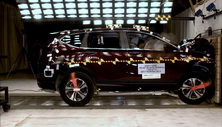
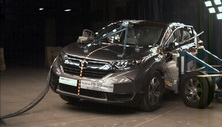
Crash-test ratings (NHTSA NCAP)
Recent complaints
[XXX] <[XXX]> 12:38 AM (0 minutes ago) to me 2017 Honda CR-V EX-L AWD, approximately 111,000 miles. While driving, my vehicle suddenly displayed multiple warnings and repeated beeping, including Hill Start Assist, Adaptive Cruise Control, and Collision Mitigation System problems. The vehicle appeared to slow down and the brakes seemed to grab or engage unexpectedly, creating a risk of losing control or causing a collision with surrounding traffic. Startup stuttering has also occurred. The failed component is UNKNOWN. Possible causes include a malfunction in the ABS/VSA brake-control system, electronic parking brake, sensors, wiring, or electrical controls. A fuel-delivery or engine issue may explain the startup stuttering. The vehicle is available for inspection upon request. The problem has not been confirmed or reproduced by a dealer or repair facility to my knowledge. An auto-parts store tested the battery, starter, and alternator, which reportedly passed. Honda advised that my VIN is not covered by a fuel-pump recall. A manufacturer inspection specifically addressing the braking issue is UNKNOWN. No police or insurance inspection is known to have occurred. The warning messages appeared suddenly during the driving incident. The exact date was XXX going a speed of 60 and dropped down to 20 due to automatic braking, and road conditions were good, not wet or bumpy. The root cause according to Honda seems to be a fuel pump failure. I am reporting this incident because unexpected braking and multiple safety-system warnings may indicate a serious malfunction that could endanger me, my passengers, and other road users. INFORMATION REDACTED PURSUANT TO THE FREEDOM OF INFORMATION ACT (FOIA), 5 U.S.C. 552(B)(6)
The car continuously has issues with all alerts appearing on the dashboard. This deactivates safety features like lane departure assist, front collision mitigation, and cruise control. This is a known problem with this generation of CRV and the problem has become worse since Honda starting sending letters to customers about resetting their radar sensor.
2017 Honda CR-V VIN [XXX]. Vehicle is currently excluded from NHTSA Recall 23V-158 according to Honda. However, both front seat-belt buckles exhibit the failure described by the recall: they intermittently fail to latch, sometimes latch/click and immediately release, and require repeated attempts before remaining latched. No previous seat-belt recall repair has been performed on this vehicle. INFORMATION REDACTED PURSUANT TO THE FREEDOM OF INFORMATION ACT (FOIA), 5 U.S.C. 552(B)(6)
2017 Honda CR-V VIN [XXX]. Vehicle is currently excluded from NHTSA Recall [XXX] according to Honda. However, both front seat-belt buckles exhibit the failure described by the recall: they intermittently fail to latch, sometimes latch/click and immediately release, and require repeated attempts before remaining latched. No previous seat-belt recall repair has been performed on this vehicle. INFORMATION REDACTED PURSUANT TO THE FREEDOM OF INFORMATION ACT (FOIA), 5 U.S.C. 552(B)(6)
Multiple false reports to include but not limited to safety airbags not working, collision, brakes and other safety concerns are indicated in dashboard warnings.